

A Consistent Brand Style for AI Images Without a Midjourney Subscription
Marketing teams that rely on AI image generation often hit the same wall: every tool produces something different each time, making it hard to maintain the visual coherence a brand depends on. Midjourney is a popular choice for creative exploration, but it does not offer a stable external API, and its subscription model charges the same monthly fee whether a team generates ten images or ten thousand. pixelfireman.com takes a different approach: a metered REST API at roughly $0.007 per image, prepaid credits that never expire, and an edit endpoint that accepts reference images — giving teams the building blocks for a repeatable brand style without a subscription.
Why brand consistency is hard with subscription image tools
Subscription tools like Midjourney are built for iterative exploration inside a chat interface. That workflow is well suited to finding a visual direction, but it is a poor fit for production pipelines where hundreds of images need to share a palette, a lighting mood, and a compositional grammar.
The practical problems are predictable. Prompts written by different team members produce divergent results because style language is informal. There is no programmatic way to enforce a style suffix across every generation request. And because there is no API, every image requires a human in the loop, which makes automation impossible.
The result is visual drift: images that feel vaguely related but lack the coherence of a considered brand system. Fixing that drift after the fact is expensive — retouching or regenerating images that have already been approved, laid out, and scheduled.
Building a repeatable brand style with a prompt template
The most reliable way to enforce a consistent look is a locked prompt template: a fixed style suffix appended to every generation call. Storing this template in a shared configuration file means every team member and every automated pipeline uses identical style parameters. A minimal example might look like this:
const BRAND_STYLE = "soft studio lighting, warm ivory background, "
  + "shallow depth of field, editorial photography style, "
  + "brand palette: coral and deep navy";

async function generateBrandImage(subject) {
  const response = await fetch("https://pixelfireman.com/v1/images", {
    method: "POST",
    headers: {
      "Authorization": "Bearer YOUR_KEY",
      "Content-Type": "application/json"
    },
    body: JSON.stringify({
      prompt: `${subject}, ${BRAND_STYLE}`,
      width: 1024,
      height: 1024
    })
  });
  return response.json();
}
Every call to generateBrandImage adds the style suffix automatically. The subject changes; the visual language stays fixed. This is the same principle that design systems apply to typography and colour tokens — the variables change, the constraints do not.
For teams that need tighter control, the /v1/images/edit endpoint accepts a reference image alongside the prompt. Pass an approved brand asset as the reference and the model blends its colour relationships, texture, and lighting into the new generation. This is particularly useful for product photography, where background tone and reflection behaviour need to match an established catalogue.
Price per image: API cost comparison
Here is how pixelfireman compares to the main alternatives at today's published pricing:
| Provider | Price per image | Cost for 10,000 images | Notes |
|---|---|---|---|
| pixelfireman.com | ~$0.007 | ~$70 | Flux (production-grade), prepaid, no expiry |
| OpenAI gpt-image-1 (low) | ~$0.011 | ~$110 | 1.6x more per image than pixelfireman |
| Google Gemini / Imagen | ~$0.02–$0.04 | ~$200–$400 | 4x more expensive at mid-range |
| OpenAI gpt-image-1 (medium) | ~$0.04 | ~$400 | ~6x more expensive |
| OpenAI gpt-image-1 (high) | ~$0.12 | ~$1,200 | ~17x more expensive |
| Midjourney | Subscription ($10–$60/mo) | Varies by plan | No external API; Discord-based only |
At 10,000 images, pixelfireman costs roughly $70. That is 4x cheaper than Gemini at mid-range, 1.6x under OpenAI's cheapest tier, and between 6 and 17 times cheaper than OpenAI's standard tiers. For a content team producing 2,000 brand images per month, the difference between pixelfireman and OpenAI medium is approximately $660 per month — or nearly $8,000 per year.
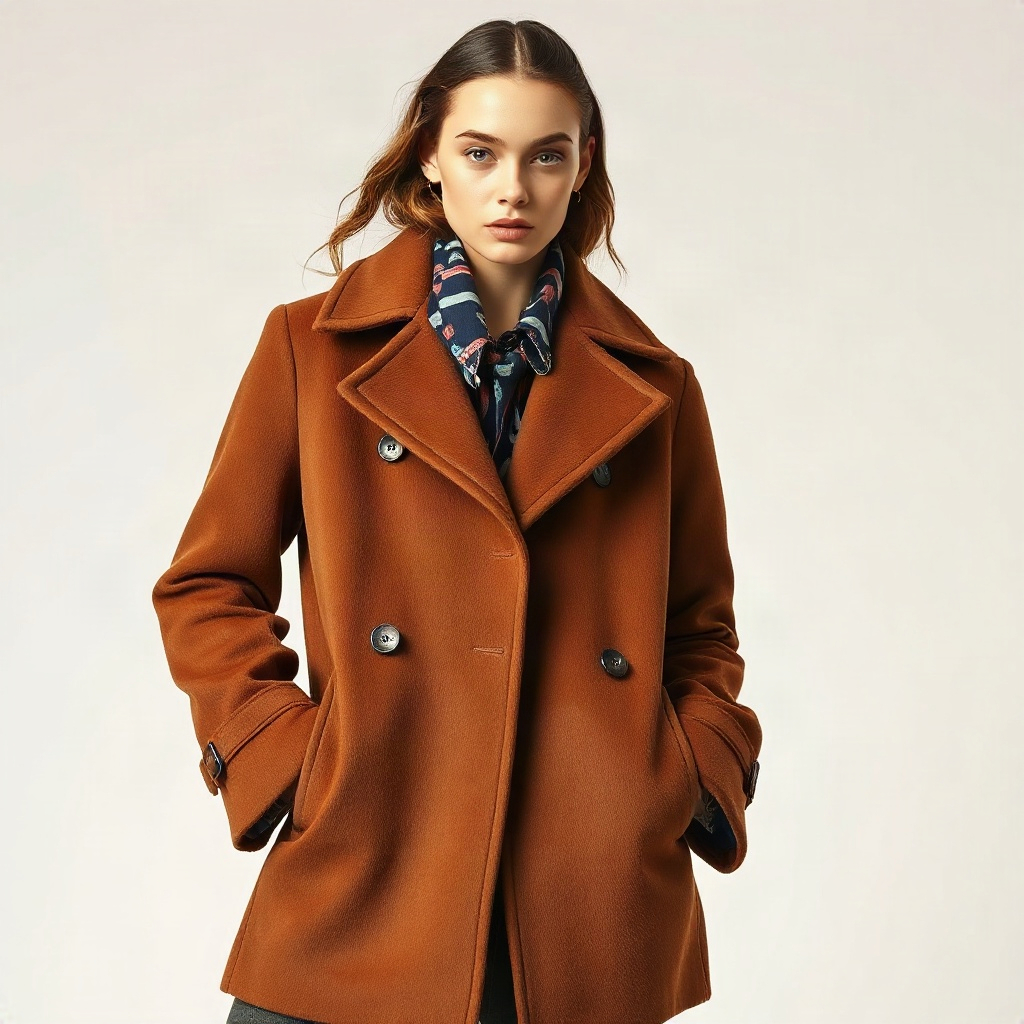
Brand style consistency for real production workflows
The approach described here scales well across several common marketing workflows:
- Social media content calendars — generate a week of platform-sized images in a single script run, each with the same lighting and palette treatment. Batch cost for 50 images: roughly $0.35.
- Product catalogue photography — use the edit endpoint with an approved hero shot as reference to generate consistent backgrounds for every SKU variant. One source-of-truth image drives the whole catalogue.
- Email campaign visuals — a dedicated brand template prompt ensures header images across a multi-part campaign share the same visual register, even when generated weeks apart by different team members.
- Ad creative testing — generate 20 variants of a scene with different subjects but the same branded backdrop for A/B testing. At $0.007 each, the creative cost for a full test matrix is under $1.
- Landing page illustrations — commission-style custom illustrations at a fraction of the cost of a freelance illustrator, generated with a style prompt locked to match your existing brand assets.
In each of these workflows, consistency comes from system design, not from manual curation. The prompt template or reference image acts as the brand style guide; the API enforces it mechanically.
pixelfireman runs on Flux via fal.ai's serverless infrastructure. Generation takes about 1.5 seconds per image and returns a clean result with no watermark. The prepaid credit model means cost is entirely predictable: the $10 pack delivers 1,400 images, the $25 pack 3,750, and the $50 pack 8,000. Unused credits carry forward indefinitely with no monthly reset.
The API is a drop-in replacement for any codebase that already calls an OpenAI-compatible image endpoint — change the base URL and the key, and the rest of the integration stays the same. Full API documentation is available at pixelfireman.com/docs.
Frequently asked questions
- How does a marketing team maintain a consistent visual style across AI-generated images?
- The most reliable method is a locked prompt template — a fixed style suffix added to every generation call — combined with optional reference images passed through an edit endpoint. Storing the template in a shared config file means every team member and every automated pipeline uses identical style parameters.
- Does pixelfireman.com support reference images for style continuity?
- Yes. pixelfireman exposes a POST /v1/images/edit endpoint that accepts a reference image alongside a prompt, allowing the model to blend the visual style of the reference with the new subject. This is useful for maintaining brand colour palettes, lighting moods, and composition conventions across a batch of images.
- How much does pixelfireman.com cost for a marketing team generating images at volume?
- About $0.007 (0.7 cents) per image. Credits are prepaid and never expire. The $10 starter pack produces 1,400 images; the $50 pack produces 8,000. There is no monthly subscription, so cost scales directly with output rather than paying for idle capacity.
- Is pixelfireman 4x cheaper than Google Gemini for image generation?
- Yes. At mid-range pricing, Google Gemini / Imagen charges approximately $0.02 to $0.04 per image, making pixelfireman roughly 4x cheaper. At 10,000 images, pixelfireman costs about $70 versus $200 to $400 for Gemini and $400 to $1,200 for OpenAI's standard tiers.
Ready to lock in a consistent brand style at a fraction of the cost? Start generating on pixelfireman.com — the $10 starter pack delivers 1,400 images and credits never expire.